Your AC starts making a weird rattling noise at 2 AM in the middle of a Jaipur summer. Sound familiar? Most people only think about HVAC maintenance after something’s already gone wrong — and by then, you’re usually looking at a repair bill instead of a routine service charge. This HVAC maintenance guide is meant to flip that around a bit.
I’ve spent enough time around technicians and building managers to know one thing for sure: the systems that last 15+ years without major failures are almost never the fancy expensive ones. They’re the ones somebody actually looked after. A basic HVAC maintenance guide, followed consistently, does more for your system’s lifespan than any premium unit ever could on its own.
So let’s get into what actually matters — not the generic “change your filter” advice you’ve read a hundred times, but the specific stuff that makes a real difference.
Why Regular HVAC Maintenance Actually Matters
Direct answer: Regular HVAC maintenance keeps your system running at 15-20% better efficiency, cuts energy bills, prevents costly mid-season breakdowns, and can add 5-10 years to your equipment’s working life compared to a neglected unit.
Here’s the thing nobody tells you upfront — a poorly maintained HVAC system doesn’t just fail more often. It fails expensively. A compressor replacement can run you anywhere from ₹25,000 to ₹60,000 depending on your unit, while a routine service visit costs a fraction of that.
I’ve noticed that people treat their HVAC systems very differently from their cars. Everyone knows a car needs oil changes. But an air conditioner or furnace? People run it into the ground and act surprised when it dies in June.
There’s also the efficiency angle. A dirty, neglected system has to work harder to do the same job. That extra strain shows up on your electricity bill every single month, quietly, until you actually sit down and compare year-over-year numbers.
Monthly HVAC Maintenance Tasks You Shouldn’t Skip
These are the small jobs. Nothing here requires a technician, and most take under ten minutes.
- Check the air filter. If it’s visibly grey or clogged, replace it. Don’t wait for the recommended 90-day mark if you have pets or live somewhere dusty.
- Inspect vents and registers in every room — make sure furniture, curtains, or rugs aren’t blocking airflow.
- Listen for unusual sounds. Grinding, squealing, or clicking that wasn’t there before usually means something’s loose or wearing down.
- Check the thermostat batteries if you’re using a non-smart model, since a dying battery can cause inconsistent temperature readings.
A clogged filter is honestly the single biggest silent killer of HVAC efficiency. It’s such a simple fix, and yet it’s the thing I see neglected most.
Seasonal HVAC Maintenance: What Changes Throughout the Year
Your maintenance routine shouldn’t look the same in January as it does in July — the system is doing completely different work.
Pre-Summer HVAC Maintenance Checklist
Before the heat really sets in (ideally by March or early April, depending on your city), get these done:
- Clean or replace filters
- Have coils professionally cleaned if it’s been over a year
- Check refrigerant levels
- Clear debris from outdoor condenser units
- Test the thermostat calibration
Picture a small business owner in Jaipur running a retail shop — by the time May hits and temperatures cross 45°C, an AC that hasn’t been serviced since last summer is going to struggle, and struggling means higher bills and unhappy customers standing in a warm store.
Post-Monsoon and Winter HVAC Care
Once the rains pass, moisture and humidity have usually built up inside outdoor units. This is a good window to check for rust, clear blocked drainage, and inspect electrical connections that might’ve taken on moisture. If you run a furnace or heating system in cooler regions, this is also when you’d want to check heat exchangers and pilot lights before the cold really kicks in.
Cleaning Your HVAC System: A Practical Approach
Direct answer: Clean your HVAC filters monthly, condenser coils twice a year, and evaporator coils annually. Dirty coils alone can reduce cooling efficiency by up to 30%, according to several industry estimates — that’s a meaningful chunk of wasted electricity.
Coils get overlooked constantly. Filters are visible, easy to check, easy to feel guilty about. Coils are hidden away, so they just… accumulate dust and grime for years unless someone specifically goes looking.
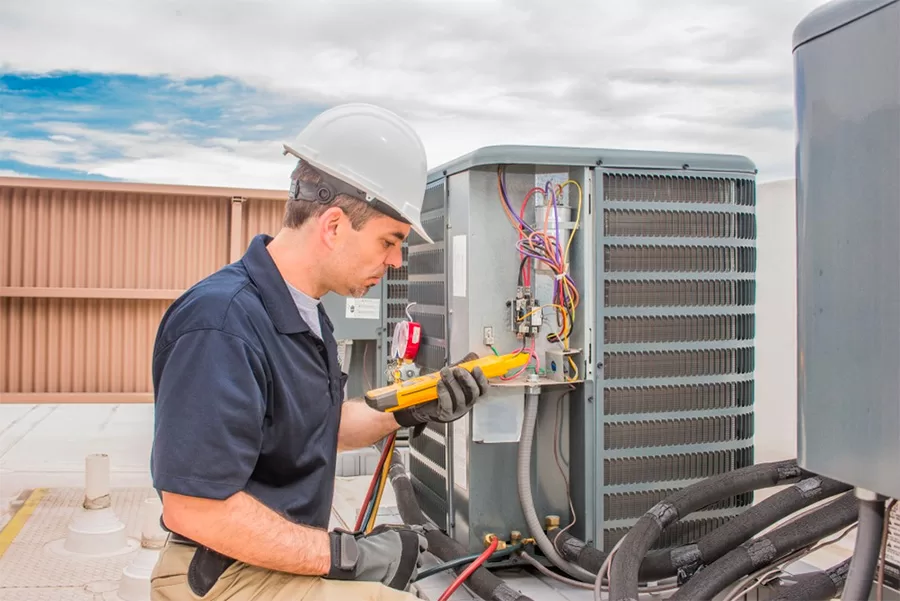
A soft brush and a coil-cleaning spray (available at most hardware stores) can handle light buildup yourself. For anything heavier, or if you notice ice forming on the coils, that’s your cue to call a professional rather than experiment on your own.
Don’t forget the outdoor unit either. Leaves, plastic bags, even bird nests — I’ve genuinely seen all three block a condenser unit’s airflow.
Thermostat Settings and Smart HVAC Maintenance
A thermostat set wrong is basically maintenance sabotage. You could have a perfectly serviced system and still waste 10-15% more energy than necessary just from bad settings.
Some practical thermostat habits worth building:
- Set your AC to 24-26°C instead of cranking it to 18°C — every degree lower adds roughly 3-5% more to your energy consumption
- Use a programmable or smart thermostat if your budget allows one; the payback period is usually under two years
- Avoid constantly switching the system on and off — that start-stop cycle actually strains components more than steady operation does
I’ll admit I used to think smart thermostats were a bit of a gimmick. Changed my mind after actually tracking bills for a friend’s apartment before and after — the difference was real, not marketing fluff.
Common HVAC Problems Caused by Poor Maintenance
Skipping maintenance doesn’t just mean “the system runs a little less efficiently.” It leads to specific, predictable failures:
- Frozen evaporator coils — usually from restricted airflow (dirty filters again) or low refrigerant
- Short cycling — the system turns on and off rapidly, often from a dirty flame sensor or a mis-sized unit
- Warm air blowing from vents — could be refrigerant leaks, a failing compressor, or ductwork issues
- Strange odors — mold or mildew buildup in ducts, which is also a health concern, not just a mechanical one
Has your system ever blown warm air on the hottest day of the year? That’s rarely a random failure. It’s almost always the tail end of months of small, ignored warning signs.
[link to related guide about troubleshooting common AC problems here]
DIY HVAC Maintenance vs Hiring a Professional
Direct answer: Handle filter changes, vent cleaning, and basic visual inspections yourself. Leave refrigerant handling, electrical work, and internal coil cleaning to licensed technicians — mishandling these can void warranties or cause safety hazards.
There’s a reasonable middle ground here. You don’t need to call a technician every time you hear the unit turn on. But you also shouldn’t be opening up refrigerant lines with a YouTube tutorial as your only guide.
My honest opinion? Get a professional tune-up twice a year — once before summer, once before winter (or monsoon, depending on your region). It typically costs less than a single emergency repair call, and it catches problems while they’re still small and cheap to fix.
[link to related guide about choosing the right HVAC service provider here]
Creating Your Own HVAC Maintenance Schedule
Building a schedule doesn’t need to be complicated. Here’s a simple framework:
| Frequency | Task |
| Monthly | Filter check/replacement, visual inspection |
| Quarterly | Vent and duct check, thermostat calibration |
| Bi-annually | Professional tune-up, coil cleaning |
| Annually | Full system inspection, ductwork check |
Set reminders on your phone if you’re the type who forgets otherwise (most of us are, honestly). A sticky note on the thermostat works just as well if you’re old-school about it.
[link to related guide about extending the lifespan of your HVAC unit here]
The Cost of Neglecting HVAC Maintenance
Let’s talk numbers, because vague warnings don’t convince anyone. A neglected system typically:
- Consumes 15-25% more energy than a well-maintained one
- Has a lifespan of 10-12 years instead of the typical 15-20 years
- Costs 2-3x more in repair bills over its lifetime
- Increases the risk of a complete breakdown during peak season, when technicians are booked out and prices spike
That last point matters more than people realize. Everyone needs a repair in June, so everyone’s paying premium rates in June. Servicing in February or March, when technicians actually have time, tends to be cheaper and faster.
Frequently Asked Questions
How often should I service my HVAC system? Twice a year is the general recommendation — once before peak cooling season and once before peak heating season. If you’re in a dusty area or run the system almost year-round, quarterly checks aren’t overkill.
How long does HVAC maintenance usually take? A standard professional tune-up takes about 60-90 minutes. A more thorough deep clean, especially if coils need attention, can take half a day.
Can I do HVAC maintenance myself? Basic tasks, yes — filters, vents, visual checks. Anything involving refrigerant, electrical components, or internal parts should go to a licensed technician.
What’s the average cost of HVAC maintenance in India? A routine service visit generally falls between ₹500 and ₹2,000 depending on your city and system type. Deep cleaning or coil servicing can run higher.
Does regular maintenance really lower electricity bills? Yes, and it’s not marginal. Well-maintained systems commonly run 15-20% more efficiently, which shows up clearly if you compare monthly bills before and after a proper service.
What’s the biggest mistake people make with HVAC maintenance? Ignoring filters. It sounds too simple to matter, but a clogged filter restricts airflow, forces the whole system to work harder, and is behind a huge share of the “mystery” breakdowns people end up calling technicians for.
Conclusion
None of this requires you to become an HVAC expert overnight. Check your filters monthly, get a professional tune-up before each major season, and pay attention when something sounds or feels off. Those three habits alone will save you money and headaches over the life of your system.
If your unit hasn’t been looked at in the last six months, that’s really the only sign you need — go ahead and book that service call before the next season catches you off guard.