Standing in a paint store staring at a wall of sheen samples that all look identical from three feet away? Yeah, I’ve been there. Picking the best paint finish for rooms in your house isn’t really about which one looks nicest on the little cardboard swatch — it’s about how that finish behaves once it’s on your actual walls, dealing with actual humidity, actual grubby handprints near the light switch.
I’ve repainted enough rooms in my own home to have opinions on this, some of them formed after picking the wrong finish and regretting it within a year. Kitchen walls in flat matte, for instance. Never again.
This guide breaks down each finish type, where it works best, and where people commonly get it wrong.
What’s the Difference Between Matte, Satin, and Gloss?
Paint finishes differ mainly in sheen level and durability — matte has little to no shine and hides wall imperfections well, satin offers a soft glow with better washability, and gloss provides a shiny, highly durable surface that’s easiest to clean but shows every wall flaw.
Sheen level essentially comes down to how much light bounces off the dried paint surface. More sheen generally means more durability and easier cleaning, but it also means less forgiveness for uneven walls, patched cracks, or old plaster imperfections.
Here’s the general order from flattest to shiniest:
- Matte/flat — no shine, best at hiding surface flaws, least durable and hardest to clean
- Eggshell — slight sheen, a step up in durability from matte
- Satin — soft, low-key glow, good balance of durability and forgiveness
- Semi-gloss — noticeably shiny, very washable, shows more wall imperfections
- High gloss — maximum shine and durability, but any wall flaw becomes obvious
There’s no universal “best” here. It genuinely depends on the room, how the walls were prepped, and honestly, how much cleaning you’re realistically going to do.
Best Paint Finish for Living Rooms
For most living rooms, satin or eggshell finish hits the right balance — enough sheen to wipe away everyday marks and light dust, without showing every bump and seam on the wall the way a glossier finish would.
Living rooms deal with a mix of foot traffic, occasional spills, and a lot of visual attention since guests actually sit and look around the space. Flat matte, while trendy in a lot of interior design photos right now, isn’t always practical here — it scuffs easily and doesn’t wipe clean without leaving a slightly different sheen where you rubbed it.
I’ve noticed a lot of homeowners get talked into flat matte purely because it looks moody and sophisticated in magazine spreads. It does look great, I’ll give it that. But if you’ve got kids, pets, or just regular foot traffic near the walls, you’ll be touching up scuff marks constantly.
Satin gives you most of that soft, elegant look without the maintenance headache. Eggshell is a solid middle-ground option too, especially if your walls have some texture or minor imperfections you’d rather not highlight.
Best Paint Finish for Kitchens and Bathrooms
Semi-gloss or satin finishes work best in kitchens and bathrooms, since these rooms deal with grease, steam, and moisture — surfaces that need to wipe clean easily and resist mildew better than a flat finish ever could.
This is where finish choice actually matters for function, not just looks. Grease splatters near the stove, steam from showers, condensation on bathroom walls — flat matte just doesn’t hold up here.
- Kitchens: Semi-gloss near the stove and backsplash areas specifically; satin is fine for the rest of the kitchen walls if you want a softer overall look.
- Bathrooms: Semi-gloss handles humidity and steam far better, and resists mold growth more effectively than lower-sheen options.
- Ceiling in bathrooms: Often overlooked, but a slightly higher sheen here helps resist the moisture buildup that flat ceiling paint struggles with.
Picture a small business owner in Jaipur who ran a small home-stay and painted all the guest bathrooms in a trendy matte finish to match the rest of the property’s aesthetic. Within a year, she was dealing with visible mildew staining and scuff marks that wouldn’t wipe off. She repainted in semi-gloss and hasn’t had the same issue since.
Best Paint Finish for Bedrooms
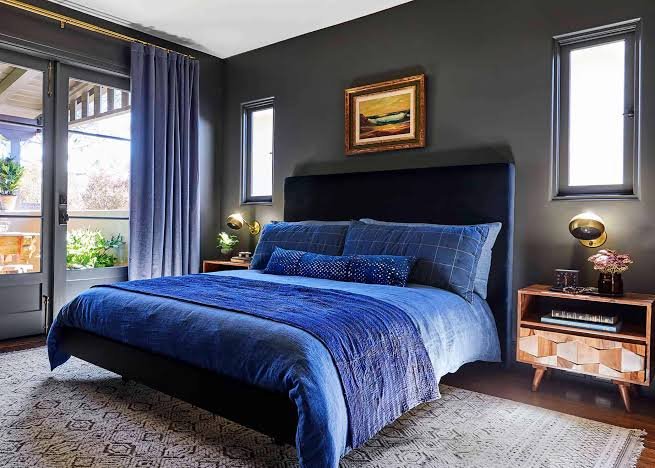
Bedrooms are one of the few rooms where matte or flat finish genuinely works well — lower traffic, fewer spills, and the soft, non-reflective look tends to feel calmer for a space meant for rest.
That said, if you’ve got kids sharing a bedroom, or the walls near the bed frame and door tend to get scuffed, eggshell is a safer bet. It still gives a fairly soft look but wipes clean far more easily than true flat matte.
A few practical notes for bedroom walls:
- Matte works particularly well on accent walls or textured wallpaper-adjacent walls, where you want zero shine drawing attention to surface texture.
- Eggshell is the more practical default for kids’ rooms or guest bedrooms that see more wear.
- Avoid high-gloss in bedrooms almost entirely — the reflective surface can actually be visually harsh under overhead lighting, especially at night.
Has this ever happened to you — a bedroom that looks beautifully moody during the day but weirdly glarey at night with the lights on? That’s usually a sheen mismatch with the room’s lighting setup.
Best Paint Finish for Trim, Doors, and Ceilings
Semi-gloss or gloss finish is the standard choice for trim, doors, and window frames, since these surfaces get touched constantly and need a durable, easy-to-wipe surface — while ceilings almost always use flat matte to minimize glare and hide imperfections.
Trim and doors take a beating. Hands touching door frames, kids dragging backpacks along baseboards, chairs bumping against skirting — durability matters more here than almost anywhere else in the house.
Ceilings are the opposite case entirely. You want flat matte specifically because it minimizes light reflection and glare, and honestly, most ceilings have minor imperfections from construction that a glossier finish would only draw attention to.
[link to guide on exterior house painting costs and tips here]
One small thing people often miss: doors and trim don’t need to match wall color exactly, but the sheen contrast between a flat wall and semi-gloss trim actually adds a nice bit of visual depth to a room, rather than looking mismatched.
Durability and Cleaning: Which Finish Lasts Longest?
Higher-sheen finishes like semi-gloss and gloss are more durable and easier to clean than matte or flat paint, since the smoother, harder surface resists staining and wipes clean without absorbing marks the way flatter finishes do.
If you’re choosing based purely on longevity and low maintenance, gloss wins every time. The trade-off, as covered earlier, is that gloss shows every wall imperfection mercilessly — so it’s really only a good fit for trim, doors, and high-moisture rooms rather than entire living spaces.
Cleaning-wise, here’s roughly how each finish handles a damp cloth wipe:
- Flat/matte: Can smear or lose sheen slightly when scrubbed; best for low-touch walls.
- Eggshell: Handles light wiping reasonably well without much sheen change.
- Satin: Wipes clean easily, holds up to moderate scrubbing.
- Semi-gloss/gloss: Handles frequent cleaning and even mild scrubbing without issue.
For high-traffic homes — especially ones with young kids or pets — I’d lean toward satin as the default for most walls, saving semi-gloss for trim and wet areas, and reserving flat matte for bedrooms and low-touch accent walls only.
Common Mistakes When Choosing Paint Finish
A few mistakes show up again and again, and most of them are avoidable with just a bit of planning before you commit to a whole gallon.
- Using flat matte in high-traffic hallways — this one’s probably the most common regret I hear about, since hallway walls get bumped and scuffed constantly.
- Choosing gloss on walls with poor surface prep — every dent, patch, and uneven spot becomes painfully visible under a shiny finish.
- Assuming one finish works for the whole house — different rooms genuinely have different needs; there’s no single best paint finish for rooms across an entire home.
- Ignoring lighting conditions — a finish that looks great under natural daylight can read very differently under warm artificial bulbs at night.
- Skipping a test patch — sheen can look quite different on a small swatch card versus a full wall under your room’s actual lighting.
[link to related guide on choosing exterior vs interior paint types here]
I’ll admit I’ve made the test-patch mistake myself more than once, trusting a swatch instead of actually painting a small section and living with it for a day or two. Cheap lesson to learn, but still an annoying one.
FAQs
What’s the best paint finish for a small apartment with kids? Eggshell or satin tends to work best — durable enough to handle scuffs and easy cleaning, while still giving a softer look than semi-gloss throughout main living areas.
Is matte paint hard to clean? Yes, relatively speaking — matte finishes can smear or lose their even sheen when scrubbed, which is why it’s better suited to low-traffic rooms like bedrooms rather than hallways or kitchens.
Should ceilings and walls have the same paint finish? No, ceilings almost always use flat matte regardless of the wall finish, since it minimizes glare from overhead lighting and hides minor construction imperfections better.
What paint finish hides wall imperfections best? Flat or matte finish hides imperfections most effectively, since it doesn’t reflect light the way glossier finishes do — this makes it a good choice for older walls with visible patches or texture.
Can I use semi-gloss on all my walls for easier cleaning? You can, but it’s not usually recommended for entire rooms, since semi-gloss highlights every wall flaw and can look overly shiny or clinical in large, evenly lit spaces.
Does paint finish affect how a color looks on the wall? Yes, noticeably — the same paint color can look darker and richer in matte, while appearing slightly lighter or more reflective in satin or gloss, due to how each finish handles light.
Conclusion
There’s no single best paint finish for rooms across your whole house — it really depends on foot traffic, moisture exposure, and how much cleaning each space realistically needs. Matte suits bedrooms and low-touch accent walls, satin and eggshell handle most living spaces well, and semi-gloss earns its place in kitchens, bathrooms, and on trim where durability matters most.
Before you commit to gallons of paint for the whole house, grab a couple of sample pots and paint small test patches in each room — live with them for a day or two under your actual lighting, and you’ll avoid the kind of finish regret that only shows up after the whole room’s already done.