Ever inherit a grandmother’s carved wooden dresser and have absolutely no idea how it’s supposed to sit next to your sleek, minimal sofa? That’s the exact moment most people either panic and buy an entirely new matching set, or just give up and shove the old piece into a spare room.
Neither is necessary. Learning to mix and match furniture styles is honestly one of the more freeing design skills you can pick up — it means you’re not locked into buying an entire matching showroom set just because that’s what feels “safe.”
I used to be a strict matchy-matchy person myself, if I’m being honest. Everything coordinated, nothing clashed, and the room looked… fine. Just fine. It wasn’t until I started mixing an old teak side table with newer, cleaner pieces that a room actually started feeling like mine instead of a catalog page.
Why Mixing Furniture Styles Works Better Than Matching Sets
A room built entirely from one matching furniture set often looks flat and impersonal, while thoughtfully mixed pieces from different eras or styles create depth, visual interest, and a space that feels collected rather than purchased all at once.
Matching sets are the safe choice, sure. Nobody’s going to call a fully coordinated bedroom set “wrong.” But it also tends to look like a showroom display rather than an actual home someone lives in.
A few reasons mixing works better long-term:
- It’s more budget-friendly over time — you can add pieces gradually rather than buying an entire set at once.
- It ages better — a mixed room doesn’t look dated the moment one trend passes, since it’s not tied to a single era’s aesthetic.
- It tells a story — inherited pieces, travel finds, and newer purchases together feel more personal than anything bought off a showroom floor.
- It’s more sustainable — reusing or repurposing older furniture, rather than replacing it entirely, cuts down on unnecessary waste.
That said, mixing styles without any structure just looks chaotic. There’s a difference between an intentionally eclectic room and one that looks like it happened by accident. The next few sections cover how to actually pull off the first one.
Start With a Unifying Element
The easiest way to mix and match furniture styles without it looking messy is to pick one unifying element — color, material, or shape — and repeat it across otherwise different pieces, giving the eye something consistent to latch onto.
This is genuinely the single most useful trick in the whole process. Without some kind of thread tying pieces together, a room full of different furniture styles just reads as random rather than intentional.
A few ways to create that thread:
- Color — even wildly different furniture pieces feel connected if they share a common color family, whether that’s warm wood tones or a consistent accent color across cushions and accessories.
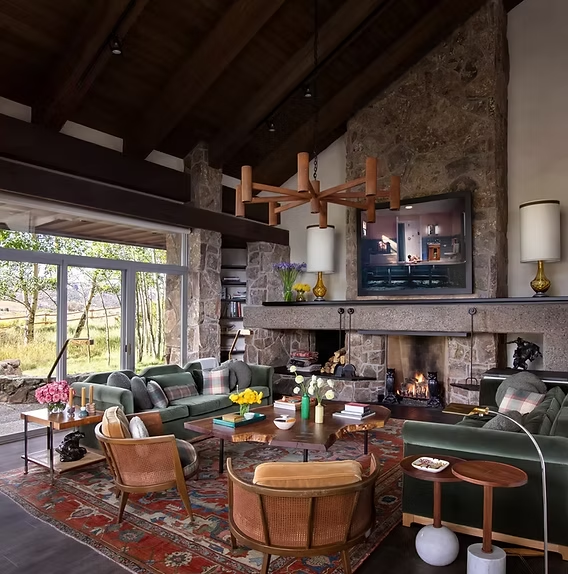
- Material — mixing a modern glass coffee table with a vintage wooden cabinet works because both can share metal legs or hardware in the same finish.
- Shape or line — rounded, organic shapes paired together (even across different eras) feel cohesive; sharp angular pieces mixed with soft curves need more careful balancing.
Picture a small business owner in Jaipur who runs a boutique café and combined mid-century wooden chairs with industrial metal café tables. On paper, that’s two very different styles. But she kept the wood tones consistent across both — warm, honey-toned finishes — and the whole space reads as intentional rather than mismatched.
Balance Old and New Pieces
A well-balanced room mixing old and new furniture typically works best with roughly a 60-40 or 70-30 split, leaning toward one era as the dominant style with the other used as accent pieces rather than splitting the room evenly.
Splitting a room exactly 50-50 between two different eras or aesthetics tends to look indecisive rather than intentional. One style needs to lead.
- If your room is mostly modern, let one or two vintage or antique pieces stand out as statement items — an old cabinet, a carved wooden bench, a heritage brass lamp.
- If your room leans more traditional or vintage overall, a few clean-lined modern pieces (a glass table, a simple sofa) can keep it from feeling like a period room.
- Avoid scattering old and new pieces evenly throughout — group them so the eye reads intention rather than randomness.
I’ve noticed people often want to showcase every inherited or vintage piece they own all at once, out of sentimentality more than design sense. Totally understandable, but it usually works better to rotate pieces in and out, rather than cramming everything into one room.
Mixing Wood Tones Without It Looking Off
Mixing different wood tones works well as long as they share either warm or cool undertones consistently — combining warm honey-toned wood with cool grey-toned wood in the same space is what usually creates a visually jarring, mismatched look.
This trips people up more than almost anything else in furniture mixing. Wood isn’t just “wood” — it has undertones, and clashing undertones is where a lot of mixed rooms start feeling off without people quite understanding why.
- Stick to either warm woods (teak, oak, mango wood) or cool woods (grey-washed, ashy finishes) as your dominant palette.
- Use one wood tone as the “anchor” — usually your largest piece, like a dining table or bed frame — and vary smaller pieces around it.
- If you genuinely want to mix warm and cool wood, separate them with a neutral material (metal, glass, fabric) in between so they’re not sitting directly against each other.
[link to related guide on best paint finishes for different rooms here]
How to Mix Modern and Traditional Furniture
Combining modern and traditional furniture works best when you let one style set the “bones” of the room — layout, wall color, larger furniture pieces — while the other style shows up in accents, textiles, or smaller statement pieces.
This is probably the most common style-mixing scenario in Indian homes specifically, since a lot of households have inherited traditional wooden furniture alongside newer, more contemporary purchases.
A few practical approaches:
- Use a traditional carved wooden piece (a jhula, an old trunk repurposed as a coffee table) as a standout accent in an otherwise modern room.
- Pair modern, clean-lined sofas with traditional textiles — a handwoven throw, a block-print cushion cover — to bridge the two aesthetics.
- Keep wall colors and large surfaces (flooring, main furniture) more neutral and modern, letting traditional accents carry the character without overwhelming the space.
Has this ever happened to you — a room that feels like two completely separate design decisions awkwardly sharing space? That usually means neither style was given a clear lead role, and both are fighting for attention instead of working together.
Common Mistakes When Mixing Furniture Styles
A few patterns come up again and again, and most are avoidable once you know what to watch for.
- Mixing too many styles at once — three or four different aesthetics competing in one room rarely works; stick to two, maybe a hint of a third as an accent.
- Ignoring scale — a delicate antique chair next to an oversized modern sectional can look genuinely awkward if the proportions aren’t considered.
- No unifying thread at all — as covered earlier, without a shared color, material, or shape, mixed furniture just reads as clutter.
- Overcorrecting into total chaos — some people, once they give themselves permission to mix styles, go overboard and lose all cohesion; a little restraint still matters.
- Forgetting the room’s function — a beautifully eclectic dining set that’s genuinely uncomfortable to sit in for a full meal isn’t actually a win.
[link to guide on seasonal home decor ideas here]
I’ll fully admit to overcorrecting once myself, filling an entire living room with pieces from at least five different eras because I got a little too enthusiastic about “eclectic.” It looked like a furniture store clearance sale, not a home. Lesson learned — restraint matters even in intentional chaos.
Practical Tips for Getting Started
If mixing furniture styles feels intimidating, start small — swap one or two accent pieces rather than overhauling an entire room, and build confidence with lower-stakes changes before committing to bigger furniture purchases.
A few starting points that don’t require a big budget or big risk:
- Swap out cushion covers or a throw to introduce a new texture or era without touching the actual furniture.
- Add one statement accent piece — a vintage stool, an inherited side table — to an otherwise uniform room.
- Reupholster an old chair in a more modern fabric, keeping the vintage frame but updating the surface look.
- Use a rug to visually bridge two different furniture styles sitting in the same space.
None of this needs to happen overnight. Honestly, some of the best mixed-style rooms I’ve seen came together over years, one piece at a time, rather than a single big shopping trip.
FAQs
Is it okay to mix different wood furniture in the same room? Yes, as long as the wood tones share similar undertones — either all warm or all cool — mixing different wood pieces generally works fine and often looks more layered than an exact matching set.
How many furniture styles can I mix in one room without it looking messy? Generally two main styles work best, with a small accent of a third if you really want it — mixing four or more distinct styles in one space tends to look cluttered rather than intentional.
What’s the easiest way to start mixing furniture styles on a budget? Start with smaller, lower-cost changes like cushion covers, a rug, or one accent piece rather than replacing major furniture, and build confidence from there before bigger purchases.
Can I mix modern furniture with inherited traditional pieces? Absolutely, and it’s a common approach in a lot of Indian homes — let the modern pieces set the overall structure of the room and use traditional pieces as standout accents rather than trying to split the room evenly.
Do all the metal finishes in a room need to match? Not strictly, but sticking to one or two metal tones (like brass and matte black, rather than four different finishes) generally looks more cohesive than a completely random mix.
How do I know if my mixed furniture room looks intentional or just mismatched? Check for a unifying thread — shared color, material, or wood undertone — across the different pieces; if nothing ties them together visually, that’s usually what reads as accidental rather than designed.
Conclusion
Learning to mix and match furniture styles really comes down to finding a unifying thread — color, material, or wood tone — and letting one style lead while the other plays a supporting role. It’s not about throwing random pieces together and hoping for the best; a little structure makes all the difference between eclectic-and-intentional versus just plain mismatched.
Start with one small swap this week — a cushion cover, a single accent piece, whatever feels low-risk — and build from there. You’ll get a feel for what actually works in your space far faster than any guide, including this one, can tell you upfront.